
Pay apps for window treatment contractors
Pay applications for shade and window treatment contractors
You're one of the last trades on the job, your contract is often small, and the GC still wants a full G702 and G703 every month. PayAppHub makes that paperwork take minutes instead of an afternoon.
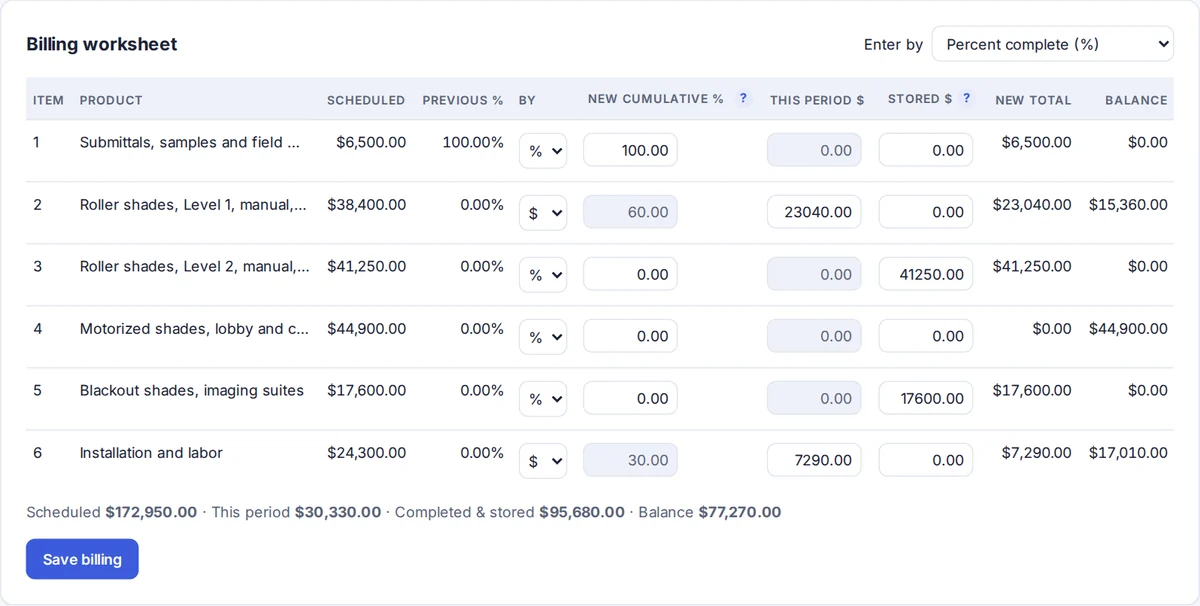
Roller shades, blinds and other window treatments sit in Division 12 on most commercial jobs: hospitals, schools, offices and multifamily. The contracts are usually smaller than the big trades', but the billing requirements are the same, and the timing is very different. Here's what makes billing window treatments different, and how PayAppHub handles it.
Most of your contract happens at the end
You sign the subcontract early, but shades can't be built until the windows are in and you've field measured every opening. Then fabrication takes weeks, and installation waits for ceilings, paint and sometimes the power for the motors. For months, there's very little to bill.
That makes the lines you can bill early important. Many GCs will accept a schedule of values like this:
| # | Description | Scheduled value |
|---|---|---|
| 1 | Submittals, samples and field measure | $6,500 |
| 2 | Roller shades, Level 1, manual, 3% openness | $38,400 |
| 3 | Roller shades, Level 2, manual, 3% openness | $41,250 |
| 4 | Motorized shades, lobby and conference rooms | $44,900 |
| 5 | Blackout shades, imaging suites | $17,600 |
| 6 | Installation and labor | $24,300 |
Bill fabricated shades as stored material
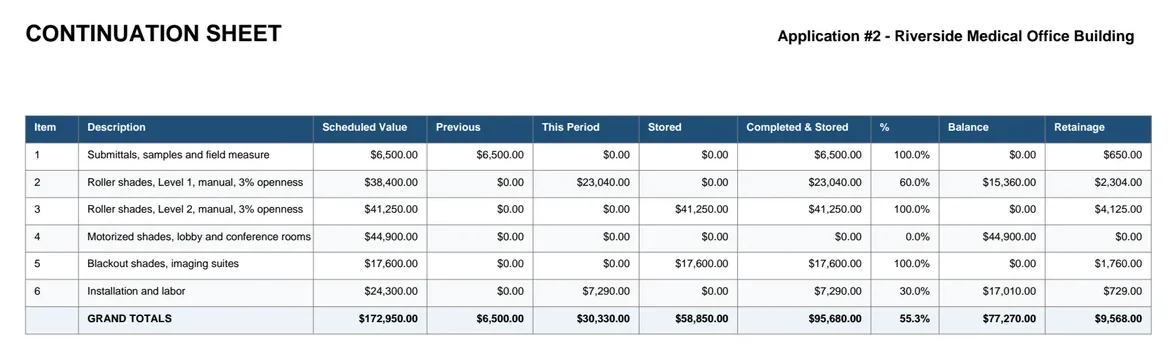
Once the shades are built and delivered to the job, or stored at your shop if the contract allows it, bill them in the Stored column with the delivery ticket and photos attached. That gets material on the pay app weeks before the last shade is hung.
Motorized shades and the trades you depend on
Motorized shades depend on power and controls work that isn't yours. Keeping them on a separate line from manual shades means you can bill the manual work as it's finished, while the motorized line waits on the electrician. If the scope changes, such as added motors, a different fabric or extra openings, add it as a change order and bill it on its own line.
Reading the Division 12 spec
Roller shades are usually specified in section 12 24 13, with blinds in 12 21 13. The spec will spell out fabric openness and color, whether shades are manual or motorized, the control system, mounting, and what submittals are required, typically product data, fabric samples, shop drawings and, for motorized shades, wiring diagrams.
Two parts of the spec are worth reading closely before you set up billing. First, who provides power and low-voltage wiring to the motors, because if that's by Division 26 your motorized line can't finish until the electrician does. Second, the extra materials requirement, since some specs ask for spare shades or extra fabric turned over to the owner. Both affect what you can bill and when.
Retainage when you're the last one out
Because shades go in at the very end, your retainage is often held until the whole building is closed out. PayAppHub keeps a running total of retainage held on every job. When it's time, one click creates the retainage application with your final lien waiver attached.
Questions
Does this work for blinds, drapery and cubicle curtains too?
Yes. Any Division 12 window treatment or specialty work billed on a schedule of values works the same way. Name the lines however your subcontract does.
Can I bill submittals and field measuring?
If your GC accepts them as a line on the schedule of values, yes. Agree on it before the first pay app.
I only have a few big jobs a year. Is it worth it?
Plans start at $39.99 a month with a 30-day free trial, and you can cancel any time. If a pay app takes you an hour or two in a spreadsheet today, it usually pays for itself on the first one.